Oct 27, 2026Buying Guides
What Fits on the Pan: Platform Size Before Capacity
Pan dimensions decide whether a bowl sits stably and whether the reading repeats. This guide covers platform sizes from 3.7 x 2.4 cm to 23 x 17 cm, and what to measure on your own vessel.
The spec line buyers skip
Capacity and readability get compared first, and pan size is treated as a detail. The pan — the platform the load sits on — decides whether the instrument works: a vessel that overhangs it, a pile that bridges the edge, and a bowl that touches the housing all produce readings that look plausible and do not repeat. Pan size does not change the capacity rating of a given build; on a configurable body the pan option and the capacity ladder are specified together, and either way the pan decides how much of that rating you can use.
The vessel sets the requirement
The object you put on the pan is the requirement, not the product you are weighing. Five hundred grams of powder in a fifteen-centimetre bowl needs a pan that supports the bowl; the same five hundred grams in a scoop requires almost no pan area. Write down the containers actually used at the bench — bowls, trays, bags, drums, counting trays — and take the largest footprint. Then look for a pan that holds it with the base fully supported rather than balanced on the rim.
Off-centre load on a small pan
A vessel that overhangs puts its centre of gravity outside the area the pan was built to support. The instrument still reads, but the reading for the same load placed at the front edge and at the back can differ, and that is what shows up as an inconsistency complaint months later. On the 3.9 x 3.6 cm pan of the DH-A06 the items are small, so overhang is unlikely. On a kitchen platform it matters as soon as a stockpot is set down off-centre. The fix is not a better scale; it is a pan wide enough for the vessel, or a bench routine that places the load in the same spot every time.
Pan sizes across these models
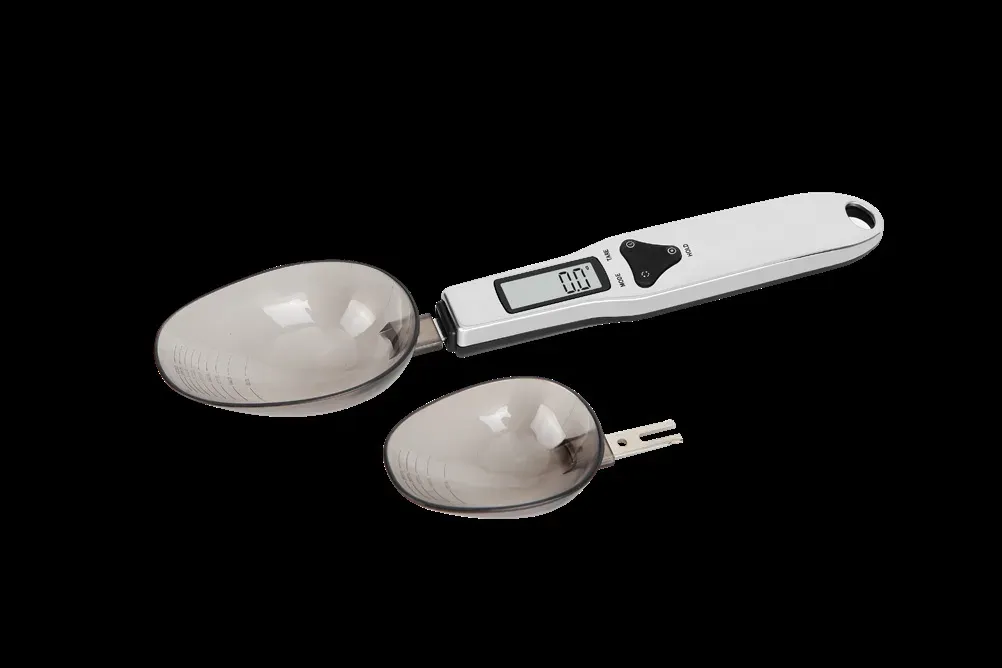
Across the models reviewed here, pan sizes run from 3.7 x 2.4 cm on the DH-CL20 and 3.9 x 3.6 cm on the DH-A06, through 6.9 x 6.9 cm on the DH-C01, to 7.7 x 6.7 cm on the DH-Z01. Pocket-scale pans are sized for items rather than vessels: a ring, a stone or a small tray sits inside them, and anything wider overhangs.
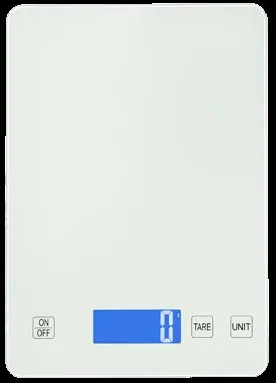
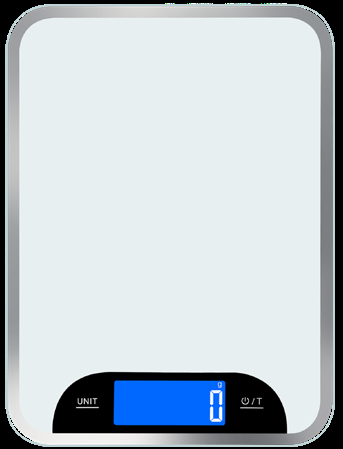
Kitchen platforms run from 10 x 10 cm on the DH-5KW and 13 x 13 cm on the DH-8905, through 16 x 16 cm on the DH-307 and 17.4 x 15.5 cm on the DH-8801, to 23 x 17 cm on the DH-A301, DH-A302, DH-A303 and DH-A30S. The DH-8705 coffee scale sits inside that range at 13 x 12.3 cm.
The bench balances take a different approach. The DH-JCS-1 and the DH-JCS-2 both offer a small 9 cm round pan and a large 13 cm round pan; the DH-JCS-1 adds a square 18.2 x 15.5 cm pan. The DH-456A carries an 8 x 14 cm pan, and the DH-456B pairs an 18 x 19.7 cm pan with its 12 kg top range.
The tea formats show how varied a pan shape can be: 11.2 x 8.5 cm on the DH-8022, 13.4 x 6.6 cm on the DH-CZ02, and a 17.6 x 7 cm platform on the boat-shaped DH-C03.
Height, lids and clearance
Footprint is only two dimensions. The DH-8022 lists its pan at 11.2 x 8.5 x 1.8 cm with a separate 11 x 8 cm wooden pallet, and the DH-C03 platform is listed at 17.6 x 7 x 3.5 cm. Pocket models differ in how the pan is covered — the DH-C01 has a printed lid, the DH-A06 a polished metal sliding cover — so the clearance under those covers is worth checking. On a jewellery counter the lid often stays open, but where the scale is closed between customers the clearance can decide whether a tray stays on the pan. Check the height of what you weigh against the cover, not only the pan.
Pan size and fine resolution pull apart
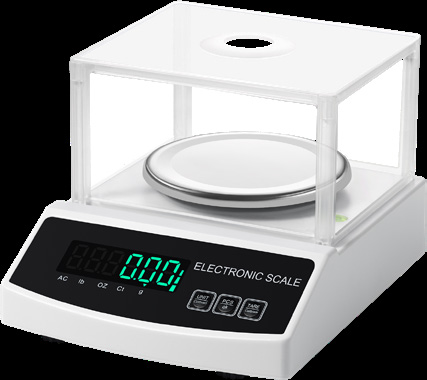
A wide pan catches air. Draft and vibration reach the load cell, and at 0.001 g every one of those shows on the display. That is why the milligram models here use small pans: a 9 cm round on the DH-JCS-1 and DH-JCS-2, and 8 x 14 cm on the DH-456A. The DH-JCS-2 wraps that format in a full glass draft shield and publishes its 0.01 g ranges on the large round pan, and the DH-JCS-1 lists a 17.5 x 15 x 8 cm draft shield of its own. If a job needs a large vessel and fine resolution at once, the answer is usually a draft shield and a bench away from doorways, not a larger pan.
What to measure before you order
Measure the outside footprint of the largest vessel and the height from the bench to its top. Measure the smallest item you need to weigh, because a pan far larger than the piece makes centring harder. Then check these measurements against the pan and the lid clearance of the model you are considering. If the vessel is a bag or a drum that hangs, a platform is the wrong format and the hanging range is the right one — that is a different tool, not a bigger pan.
A short checklist before you order
List the vessel footprints and heights; the largest one becomes the pan requirement. Confirm the pan that belongs to the capacity tier you want, not the smallest pan in the family. Check lid clearance if the scale closes between uses. Where resolution is fine, accept the small pan and plan a stable bench rather than a larger platform. Then put your own vessel on the sample: a scale that reads correctly against a test weight and rocks under your bowl is still the wrong scale for the job.