Buying Guides
Scale Display Readability: Test It at Arm's Length
Display size, contrast, viewing angle and glare decide whether a scale can be read from where the operator stands. What to compare and how to test a sample.
Readability is decided at the counter, not on the spec sheet
A scale display is read in a shop, not in a catalog. The operator stands at arm's length, often with a customer on the other side of the counter, and needs a stable number in one glance. Readability is a geometry problem before it is an electronics problem: character size, window angle and the light falling on the lens. Two scales with the same 0.1 g resolution can behave very differently at that distance.
What display sizes look like across the range
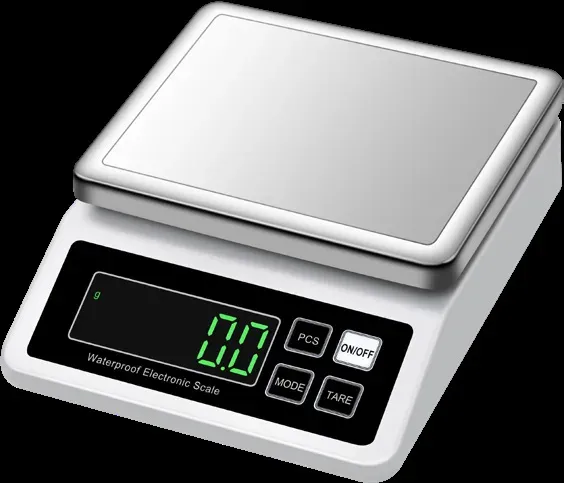
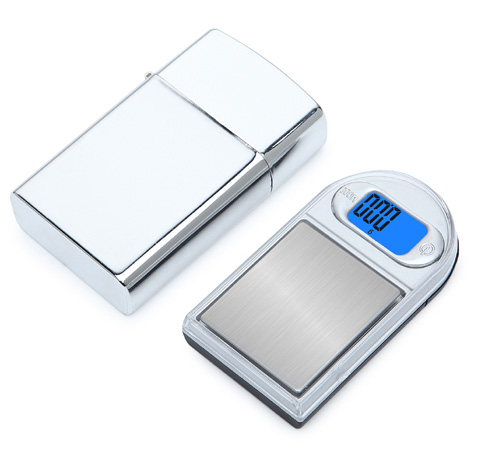
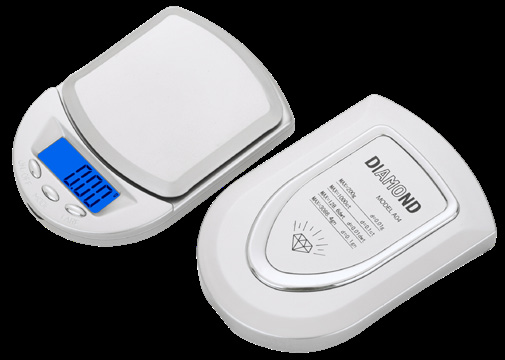
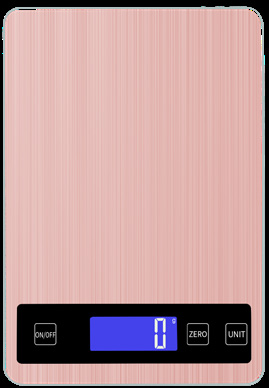
At the pocket end, the DH-A06 lists a 2 x 1.2 cm window and the DH-333 lists 2.9 x 0.8 cm. Kitchen models move up: the DH-A10 lists 5.5 x 2.1 cm, the DH-A301 5.8 x 2.2 cm and the DH-406 6.9 x 3.3 cm. The DH-AS01 carries two displays, front 6.8 x 3.8 cm and rear 10.8 x 2.8 cm. Window size is the first filter, because it sets the ceiling on character height.
These figures are external window sizes, not character heights, and the two are not interchangeable. A wide window may hold five large digits or eight small ones. On a jewelry counter the difference shows up in how quickly a carat value can be checked against a price list; on a kitchen counter it shows up in how often the operator leans over the pan. Use the numbers to group models, then confirm the font with the supplier.
Why a larger digit beats more digits
A 500 g scale at 0.01 g has to show five digits, as in 500.00; a 1 kg model at 0.01 g needs six; a 5 kg model at 1 g needs four. The extra characters have to fit the same glass. The DH-A05 must fit five characters into a 2.5 x 1 cm window, while the DH-A301 offers 5.8 x 2.2 cm for a top range of 15 kg at 1 g, five characters at full load. A crowded window usually means a smaller font, so a finer increment can cost character size. Ask for character height in millimeters, not just window dimensions.
A five-digit reading also means more decisions about decimal placement. On a 500 g scale at 0.01 g, the eye has to separate the decimal point, the digits and the unit inside a window as narrow as 2.5 cm. A 0.1 g or 1 g model with the same window is faster to read, even though it is less precise. Match the increment to the job before you judge the window.
LCD vs LED scale display: two reading experiences
LCD vs LED scale display is a contrast decision before it is a cost decision. Segment LED is typically brighter and holds contrast in dim shop light; LCD draws less power and reads well in daylight but can wash out under a strong downlight. The DH-8705 lists a white segment LED display and the DH-8705D a detachable LED display head, while the DH-456B lists an LCD. Ask which technology is fitted to the exact model you are quoting.
Backlight is a line item, not a default
A backlit scale display is useful under a counter and in a dim stockroom, but it is not universal. In this range the DH-456A and DH-456B list smart backlight among their functions. Many kitchen and pocket models publish a display size without any backlight claim. Treat backlight as a question per model: ask whether it is always on, switchable or key-activated, and whether it improves or flattens contrast in daylight.
Viewing angle changes with body height and tilt
Body height alone does not tell you the angle of the window. A 2 cm kitchen scale and a 3.5 cm tea scale can both carry a flat or a tilted display; the catalog gives dimensions, not the angle. The practical question is where the operator's eye sits when the scale is on the counter. A window that faces the ceiling works for someone standing over it and fails for a customer leaning back.
Glare is a location problem
Shop lighting decides contrast as much as the display does. A glossy window under a downlight, an open glass lid or daylight from a shopfront can put a bright band across the digits. Recessed or matte windows reduce the effect, but a photo will not tell you. Test the sample on the actual counter at the actual time of day, then repeat from the customer's side.
What to test in a sample
Set the sample where it will live. Stand at the operator's distance, then at the customer's. Load a tray, tare it, add a known weight and read the result without leaning in. Repeat under the brightest shop light and with the window clean. Ask two people who have not seen the scale to read three values aloud; hesitation and misreads are the data. Confirm character height, display type, backlight behavior and viewing angle in writing.
Record the test conditions with the sample: distance, light source, tray used and the values read. A short note is enough, but it turns a subjective impression into a comparison you can send back to the supplier with the next order. If two models are close, ask for the character height and display technology in writing, then choose the one that was read correctly by more people. Ask ZmoTek for a sample of the models above and run the test on your counter.