Oct 19, 2026Buying Guides
Precision vs Capacity: Matching a Scale Range to the Job
Why every scale trades readability against maximum load — and how to pick the range band your buyers will actually use.
One platform, two directions
Every digital scale has a maximum load and a display step, and the two move in opposite directions. Asking for more capacity on the same platform forces a coarser step; asking for a finer step caps the capacity. The practical question is not which is better, but where your buyers actually weigh.
Fine steps belong to small weights
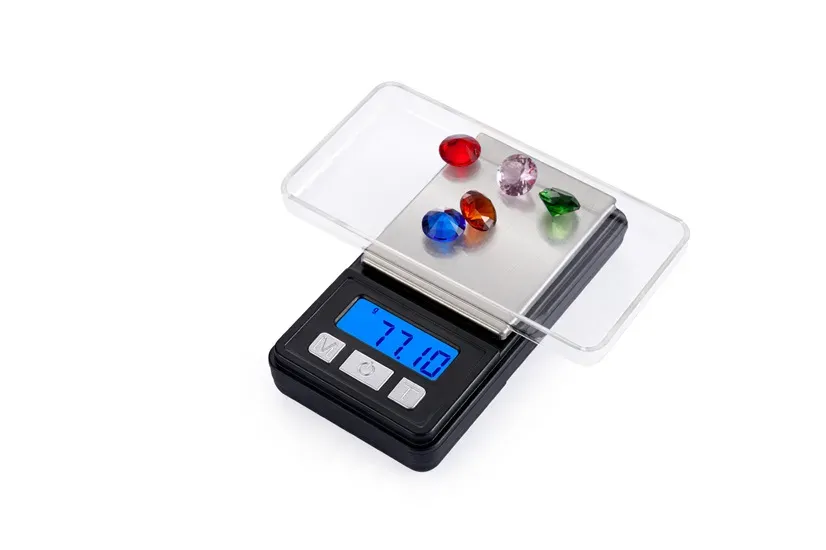
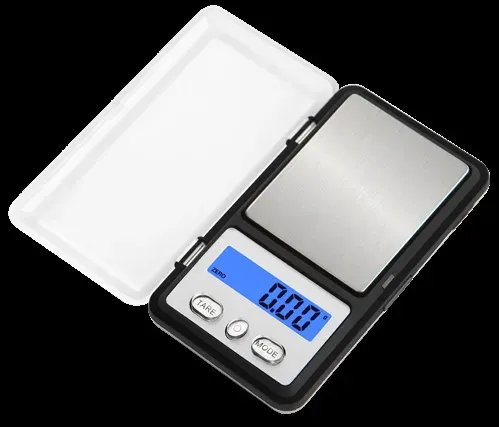
Among the pocket jewelry models compared here, the finest step is 0.01 g, and it appears on models capped between 200 g and 1 kg: the DH-333 at 200 g, the DH-958 and DH-A05 at 500 g, the DH-A07 at 1 kg. These are gem, bullion and small-dose tools. Above that range, 0.01 g becomes harder to use because platform flex and air draft can affect the reading more than the display resolution does.
Mid-range models split the difference
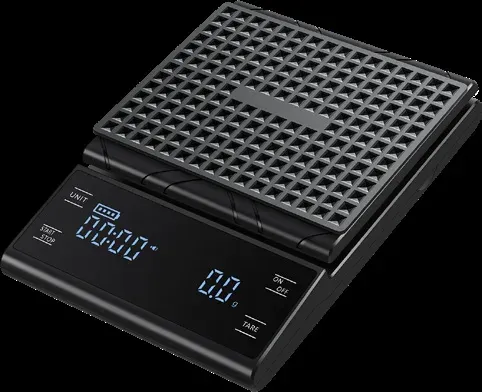
Mid-capacity kitchen scales read 0.1 g up to a few kilograms, then step to 1 g. The DH-C305 reads 0.1 g at 3 kg and 5 kg, then 1 g at 10 kg; the DH-I200 reads 0.01 g up to 1 kg and 0.1 g above. This laddered design covers a whole kitchen workflow with one SKU.
High capacity buys grams, not decimals
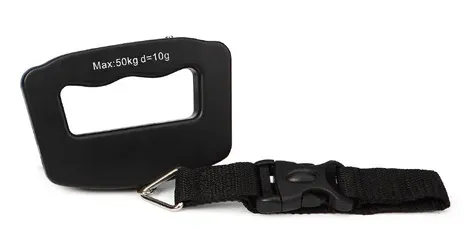
Once you pass 10 kg, the display step settles at 1 g on kitchen models and 10 g on hanging scales. The DH-A11 reaches 20 kg at 1 g; the DH-C023 and DH-C028 weigh 50 kg at 10 g. That is the correct trade for luggage, parcels and produce: nobody needs 0.1 g on a 50 kg bag.
Match the step to the complaint
The fastest way to choose: ask what buyers complain about. If they say a scale is too coarse, move down in capacity. If they say it maxes out, move up and accept a coarser step. Tell ZmoTek the range band and we will confirm which models in the catalog fit it.