Buying Guides
Postal Scale Buying Guide: Three Jobs, Three Formats
Postal, mail and parcel scales are sold on capacity, but the job decides the model. Compare hanging and platform formats, resolution, and the three tests to run on a sample.
Start with the job, not the capacity
Postal scales are usually shopped by maximum load, but the job decides the format. Three jobs are worth separating: weighing one parcel at a time, running a batch shipping station, and processing returns at a counter. A packing bench, a scale at the counter and a returns station each put a different premium on resolution, pan footprint and how fast the scale resets. Decide which job the station does most often before you compare model numbers.
Single parcel weighing: a hanging mail scale
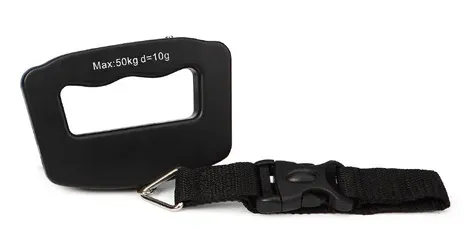
For one parcel at a time at a packing bench, a hanging scale keeps the bench clear. The DH-C028 carries a 50 kg range in 10 g steps, a 15 x 12.3 x 2.4 cm flat body, a 5 x 2.5 cm hook and a strap with buckle. The DH-C030 also reads 50 kg/10 g, with a 102 cm tape measure, an LED lamp and a 6.9 x 4.8 x 0.45 cm hook. The DH-C023 and DH-C025 are the other two hanging models; check their sheets for hook and body differences. Weigh a poly mailer bundle on the strap and a boxed parcel on the hook to see which shape your staff handles faster.
Batch shipping: a platform scale earns the bench
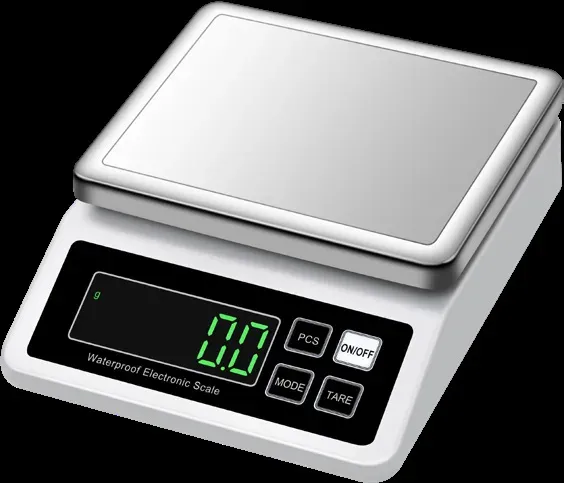
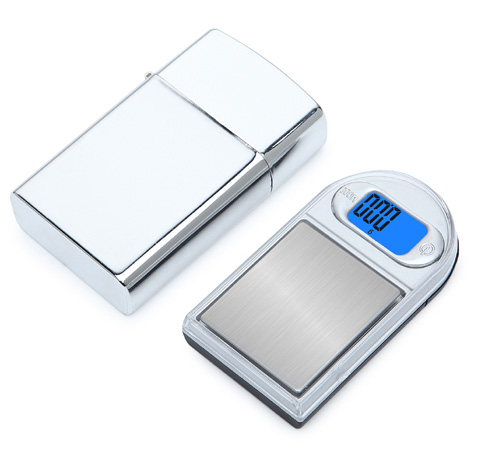
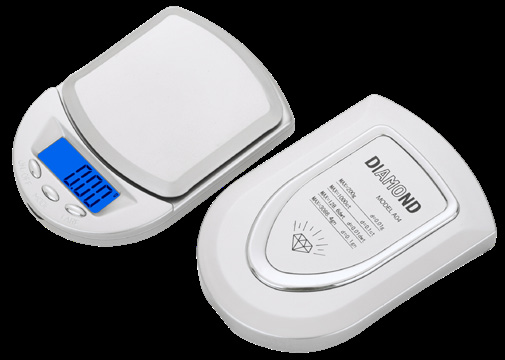
A shipping scale for e-commerce has to weigh many parcels an hour, and a platform scale keeps both hands free. The G06 round-platform model covers 5 kg/0.1 g and 10 kg/0.1 g, then 5 kg/1 g to 30 kg/1 g on a 15 cm platform. The DH-AS01 pairs a stainless tray with a 3 kg/1 g to 30 kg/1 g ladder and dual displays. For cartons under 30 kg, the 1 g step beats the 10 g step on the hanging models, and the platform is faster. Confirm the tray footprint against your largest carton.
Returns desk: a clean tray and a fast reset
Returns work mixes open items, poly mailers and totes, so the scale has to reset quickly and wipe clean. A platform format is usually the better fit: the operator can set down a tote, zero the display, and weigh the contents without holding a strap. The DH-AS01 stainless tray and rear display suit a shared counter, while the G06 15 cm round platform fits a smaller desk. The working spec for this desk is 30 kg/1 g on a tray wider than the tote base; 0.1 g resolution is wasted here. Check the tray against the tote you use most often.
Hanging versus platform at a shipping station
At a shipping station the choice is about bench space and hand motion, not about which format is better. A hanging scale leaves the bench free for packing and takes odd-shaped soft parcels that will not sit flat. A platform scale lets the operator set a carton down, tare it and load it without holding a strap, which is faster for repeats. Lifting a 25 kg parcel onto a hook takes two hands and clearance; sliding a carton onto a platform takes one motion. Match the format to the motion your staff repeat.
What 10 g and 1 g mean at the counter
Resolution is not accuracy, and neither is the same as the carrier's billing rule. A 10 g step means the display moves in 10 g increments; on a 4 kg parcel that is a coarse but workable read. A 1 g step gives a finer display, which helps on light mail and small returns where a 10 g jump is a large share of the total. Ask the carrier which increment it bills on and whether it rounds up, then choose the resolution that leaves the least ambiguity at the counter.
Test three things on a sample
Put the sample through three checks before you commit. First, zero drift: power on, leave the platform empty and watch the display for a minute or two; a reading that creeps suggests the bench or the feet need attention. Second, hold behavior: if the model offers a hold mode, weigh a parcel, set it down and see how long the value stays; if not, the display will simply track the load. Third, tare with a box: place the empty carton on the platform, tare, then load it and confirm the net reading. Run each check with the weights you actually ship.
Confirm power, units and the carton plan
Power and carton counts differ across the hanging range. The C028 uses 2 x AAA batteries and lists g, lb, oz and kg; the C030 uses 3 x AAA batteries and lists kg, g/lb/oz. The C023 and C025 also run on 2 x AAA batteries. The G06 runs on 2 x AAA batteries or a charging version, and the AS01 uses a DC charger. Carton counts run from 8 pieces for the AS01 to 100 for the C028, with the C030 at 80, so confirm the mix and whether batteries ship installed. Request a sample from ZmoTek before you commit.