Buying Guides
HACCP Scale Guide: Food Safety Weighing That Passes Audit
What a HACCP plan asks of a scale: cleanable surfaces, no traps, calibration records and a designated area. How to document checks and what to confirm in writing.
What a HACCP plan actually asks of a scale
Food safety weighing is a control point, not a gadget purchase. A HACCP plan rarely names a scale model. It asks for control: equipment that can be cleaned, a surface that does not harbor residue, a weighing step that is repeatable, and records that show the check happened. For a buyer, that translates into four questions. Can the scale be cleaned in the way the kitchen cleans? Does the housing trap food or water? Can the weighing step be verified and recorded? Is the scale used only where it should be? The scale is the last decision, not the first.
Cleanable means no traps, not just a smooth top
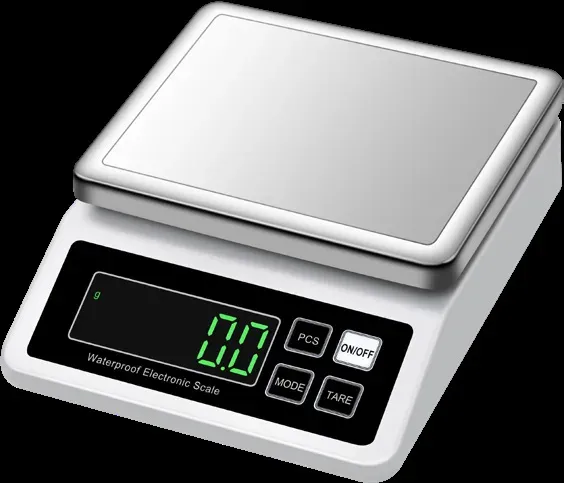
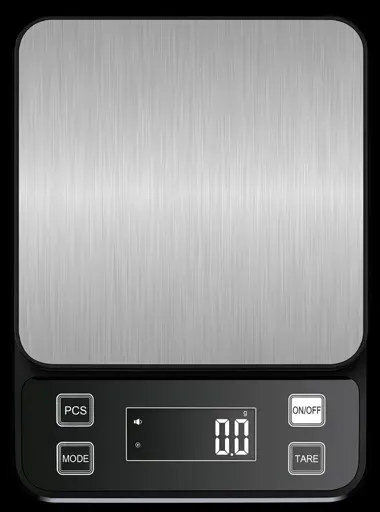
A hygienic scale is a construction claim, not a surface finish. A smooth platform is a start, but residue collects at the seam between the platform and the housing, around the display window, and in the battery compartment. Look at the tray: the DH-8903 has a stainless tray at 16.8 x 14.6 x 1.1 cm, and the DH-AS01 has a stainless tray at 19.5 x 16.7 x 1.9 cm. If the tray can be lifted out, it is easier to wash than a fixed one. Ask how the tray locates, whether it can be removed for cleaning, and what the supplier recommends for the housing around the buttons.
Designate the scale and control the area
A designated scale is a control measure. In practice, that means one scale for raw preparation and a separate one for ready-to-eat or finished product, or a documented clean between uses. Color-coded trays or a fixed stand help the team keep the rule. The scale should have a home, not a circuit around the kitchen. A wall bracket, a labeled shelf or a marked counter position all work; the point is that the same instrument is not moved from a raw bench to a packing table without a clean and a record.
Waterproofing: the evidence an auditor wants
Waterproof is a marketing word. An auditor asks a narrower question: what ingress protection level does the instrument carry, what cleaning procedure does it support, and where is the record? The DH-306B, DH-8903, DH-8906 and DH-AS01 are described as waterproof or washdown scales on their model pages, and that description is not a numeric IP rating. Before a scale goes into a washdown area, ask the supplier for the standard, the numeric level, the test condition and a test report, then write the cleaning procedure and the check record into the HACCP file.
Calibration records: what to keep
Calibration records should show three things: the date, the reference used and the result. A simple log with the scale ID, the check weight, the reading, the difference and the operator's initials is enough for most audits. Keep the reference weight certificate with the log. If the supplier documents a calibration routine, record when it was run and who ran it. The DH-8903 and DH-AS01 use a DC charger, while the DH-8906 uses USB charging; the log should also note the power source and any battery or charger change that could affect a reading.
A daily check an auditor can follow
A daily check should be short enough to survive a busy shift. Zero the empty platform, place one reference weight, record the reading, and repeat at the start and end of production. Once a week, check a second weight near the top of the range. If the reading drifts beyond the tolerance in your plan, take the scale out of service and record the action. The record is more useful when it names the product or batch being weighed, because it ties the instrument check to the food safety decision.
Keep a corrective action page behind the log. If a check fails, write what the scale read, what the reference weight was, the time, the batch affected and what was done with the product. Recheck the scale after adjustment and record the new reading. The page should also name who took the decision to hold or release the batch. Auditors look for a closed loop, not a perfect record. A single failed check with a clear corrective action is easier to defend than a log with no failures and no explanation.
Match capacity and resolution to the check
Capacity and resolution should follow the weighing step, not the biggest number in the catalog. The DH-306B covers 3 kg and 5 kg at 0.1 g and 10 kg at 1 g, with a 14.5 x 14.5 cm pan. The DH-8903 and DH-8906 both cover 3 kg and 5 kg at 0.1 g, 10 kg at 0.1 g, 10 kg at 1 g and 15 kg at 1 g. The DH-AS01 covers 3 kg to 30 kg in 1 g steps. A 0.1 g tier suits small ingredient or sample checks; a 1 g tier suits bulk receiving and batch weighing.
The questions to send the supplier
Put the questions in writing and keep the answers with the HACCP file. Ask for the cleaning method, the platform and tray material, the ingress protection rating and test report, the calibration procedure, the recommended check interval, and the spare-parts list for trays and power supplies. Also ask which unit modes the model carries: the DH-306B lists nine, the DH-8906 lists ten, and the DH-8903 and DH-AS01 list six. The answers become the evidence pack for your audit, and the specification for the next order.