Buying Guides
Fishing Scale Buying Guide: Hook, Hold and Readability
A fishing or hunting scale is judged by its hook, its hold behavior and its display in daylight. What to test on a 50 kg hanging scale before you stock it for a tackle box, kit bag or boat.
What outdoor buyers actually do with a hanging scale
A digital hanging scale for fishing is bought for a simple motion: hook the fish, lift, read, release. A hunting scale is often the same instrument sold for a different bag. That shared motion hides different demands. A tackle-box scale spends most of its life in a bag, gets wet, and may not be used for months. A boat scale is lifted in a hurry with wet hands. A produce scale is used daily and reset hundreds of times. Ask which of those uses the model will see before you compare capacity.
The hook is the load path, so inspect it first
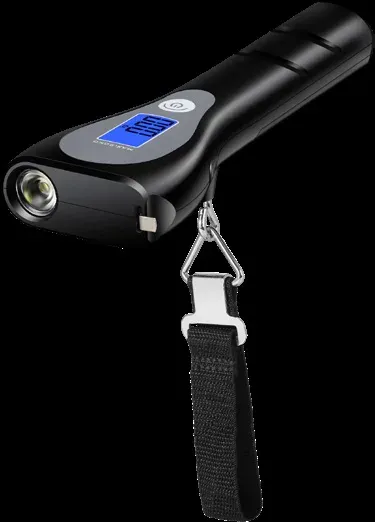
The hook is where the load enters the instrument, so it deserves more attention than the capacity line. The DH-C023 uses a 6.5 x 2.5 cm steel hook; the DH-C030 uses a 6.9 x 4.8 x 0.45 cm hook. The DH-C025 and DH-C028 are the other two models; their hook details are on their sheets. Hook dimensions tell you the opening, not the strength, so check the opening against the carabiner gate your buyers use. A carabiner wears at the contact point, so ask whether the hook edges are rounded and how the hook is attached to the body. Then hang a known load and watch the attachment.
What 50 kg and 10 g covers on the water
A 50 kg hanging scale with 10 g steps covers many fishing and hunting jobs. A 10 g step is coarse for a 200 g fish but workable for a 2 kg to 20 kg catch. The C023 and C030 both carry that ladder; the C025 and C028 are listed at the same capacity, with their own hook and body details. If your buyers weigh small fish or tackle components, add a platform scale with 1 g or 0.1 g resolution rather than asking a 50 kg hanging scale to do both jobs. Weigh the empty sling first so the net figure is the catch. Confirm the smallest load the model will register with the supplier.
Hold and tare: test them with a wet bag
Hold and tare behavior is not on a spec sheet, so test them with the bag you will use. Hang an empty weigh sling or bucket, note whether the display can be reset to zero, then add a known load and see whether the net value is stable. For hold, lift a load, set it down and check how long the value stays on screen; if the model has no hold mode, the display will simply track the load. A hold that clears before you can read it is useless on a moving boat. Ask the supplier whether a hold mode is offered and how it behaves with wet hands.
Readability in daylight, dusk and a headlamp
Display readability is not a capacity question. Contrast and viewing angle decide whether you can read the digits in shade, and direct sun can wash out a display that looked fine indoors. The DH-C030 adds an LED lamp and a 102 cm tape measure; judge the digits themselves rather than the lamp. Take the sample outside at noon and again at dusk, look at it from the angle you would hold it, and check whether the digits wash out. If your market fishes at dawn or after dark, test with a headlamp as well.
Battery type decides whether it works next season
Battery type is a stocking decision because a scale that takes an odd cell will sit unused. The DH-C023 uses 2 x AAA batteries; the DH-C030 uses 3 x AAA batteries. The DH-C025 and DH-C028 also take AAA cells; confirm the count on their sheets. AAA cells are sold in convenience stores and are easy to replace from a tackle box, which matters more than a published run time you cannot verify. Check the battery door for a gasket or seal and confirm whether batteries are included in the carton. If the model is stored for months, ask about a low-battery warning.
Wet hands, cold mornings and night trips
The same 50 kg/10 g format also weighs luggage and parcels, which is why the range is common. On the water, the harder tests are wet hands and cold mornings: grip the hook with wet gloves, hang a load, and check whether the body slips or the strap rotates. Night fishing adds a second test, because a lamp that lights the bank does not necessarily make the digits readable. Keep the scale in a dry bag between trips and check the hook for burrs where a carabiner clips on.
A sample checklist for a tackle shop or distributor
Before you stock a hanging scale, order one sample and run a short abuse test. Hang a known load near the top of the range, lower it and repeat ten times to see whether the hook or strap shifts. Wipe the body, dry it, and check the battery compartment. Read the display outdoors at noon and after dark, then repeat the tare routine with a wet sling and wet gloves. Compare the carton plan too: the C023 ships 100 per carton and the C030 ships 80; ask for the others. Request a sample from ZmoTek before you commit.