Buying Guides
Digital vs Mechanical Scale: A Wholesale Buyer's Guide
Resolution, tare, units, battery dependence, moving parts and service life, compared honestly, with a stocking rule for kitchen retail, jewelry counters and shipping benches.
The mechanism is the main difference
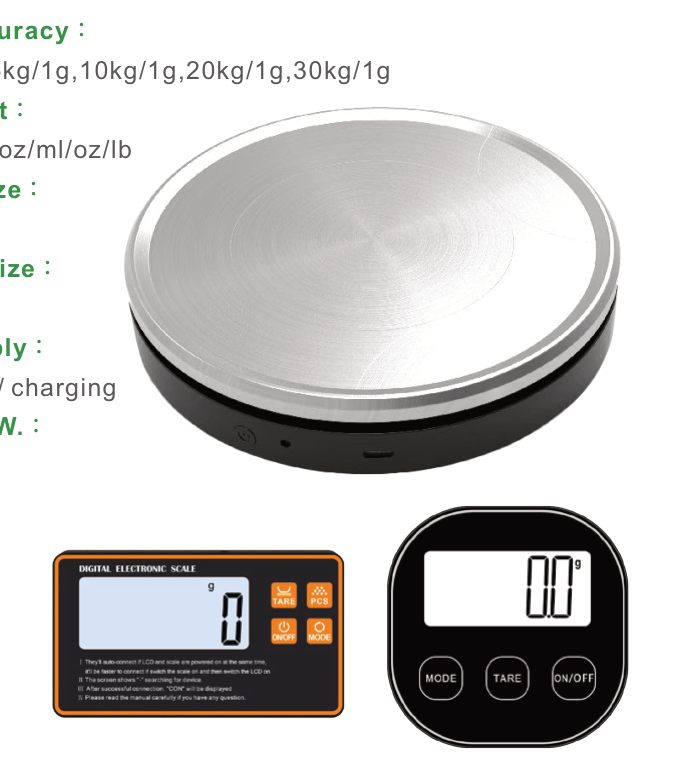
An analog scale turns a spring or a lever into needle movement; a digital scale uses a load cell, which converts weight into an electrical signal that the electronics turn into a number. That mechanism is the main difference, and the display is only its surface. A needle shows a continuous range, but graduations limit what you can read, and parallax changes the value depending on where your eye is. A digital display gives a fixed increment, such as 0.1 g or 1 g, and the same number to everyone at the counter. Neither mechanism is more honest; they fail in different ways.
Tare and units: digital carries more of the workflow
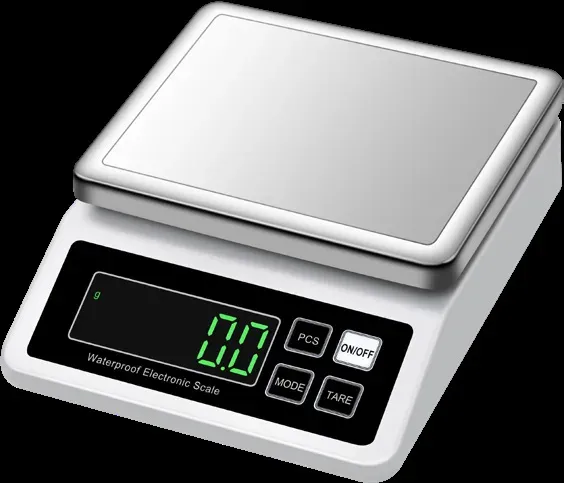
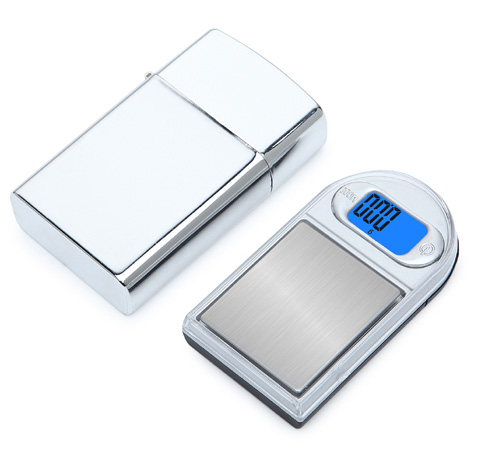
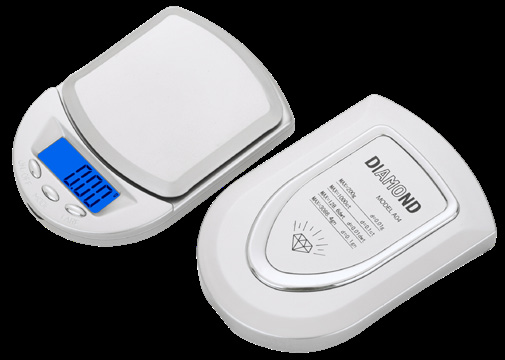
Tare is the ability to reset the display to zero with a container on the pan, and it is where digital scales earn their place in retail. A mechanical scale usually has no tare, so the operator subtracts the container weight by hand or uses a compensating dial. Digital models also switch units at the touch of a button. The DH-C305 lists nine units, including g, oz, ml, ct, kg, tl, fl:oz, lb:oz and lb; the DH-A05 lists seven, including g, ct, oz, ozt, dwt, tl and gn. For a jewelry counter, those trade units are not a convenience; they are the language of the sale.
Battery dependence is a cost you can see
Every digital scale needs power, and the power source shapes the counter routine. The DH-A05 uses 2 x AAA batteries; the DH-C305 uses 2 x AAA batteries with a USB charging version available; the DH-AS01 uses a DC charger. A mechanical scale needs no cell or cable, which is why it still sells into markets where power is intermittent or there is no outlet at the counter. For a wholesale line, count the battery type as a SKU attribute: a model that takes a common AAA is easier to support than one that takes a coin cell, and a charging version raises a question about the cable in the box.
Moving parts and service life cut both ways
Mechanical scales have moving parts: springs, pivots, levers and a pointer. Those parts wear, but they are also visible and serviceable, and a mechanical scale can often be adjusted by a technician without a circuit board. A load cell has no moving parts, while a spring or lever movement wears as it works, but they add electronics, a display and a power path. A drop that would dent a mechanical housing can crack a display window; a failed load cell usually means a replacement rather than a repair. Ask the supplier which parts are user-replaceable and what the service route is for each format.
Where mechanical still wins
Mechanical still wins in specific conditions, and a wholesale line should say so plainly. Where there is no power, a mechanical scale works without a cell or cable; where the scale is knocked or dropped, a simple mechanical body may survive abuse that would end a digital display. Where the buyer is extremely price-sensitive, a mechanical scale can be the entry point, though the lack of tare and unit switching limits its use. The honest position is not that digital replaces mechanical everywhere; it is that each format owns a different corner of the market.
Match resolution to the channel, not the catalog
Resolution is the easiest spec to overbuy. A kitchen retail scale that reads 1 g is enough for flour and produce; 0.1 g is useful for yeast, spices and coffee. The DH-C305 carries 3 kg/0.1 g, 5 kg/0.1 g and 10 kg/1 g on a 15 x 14.7 cm pan. A jewelry counter needs 0.01 g; the DH-A05 covers 100 g, 200 g, 300 g and 500 g at 0.01 g on a small 3.9 x 5 cm pan. A shipping bench needs capacity and speed more than fine resolution; the G06 reaches 30 kg/1 g on a 15 cm platform. Do not price a digital and a mechanical scale as if one mechanism replaces the other.
How to buy a mixed line wholesale
A mixed line is easier to sell when the differences are visible on the shelf. Group digital models by channel and resolution, and put the mechanical option where it solves a power or abuse problem rather than where it competes on features. Check the carton plan: the C305 ships 30 pieces per carton, the A05 ships 200, the G06 ships 24 and the AS01 ships 8. Compare the display in the light of the actual store, and confirm the unit set and power accessory with the supplier. ZmoTek can quote the digital models cited here; request a sample before you build the assortment.
Decision rule: kitchen retail, jewelry counter, shipping bench
Which scale to buy wholesale follows the channel. For kitchen retail, stock a digital scale with 0.1 g resolution in the 3 kg to 5 kg range and a 1 g option at 10 kg; the C305 and the DH-A30S both cover the 3 kg and 5 kg tiers at 0.1 g, and the C305 adds a 10 kg/1 g tier. For a jewelry counter, stock 0.01 g with carat and troy units; the A05 is the example above. For a shipping bench, stock 30 kg/1 g with a platform that fits your cartons; the G06 and the DH-AS01 cover that top range. Keep a mechanical model as a no-power backup only if your channel needs it.