Buying Guides
Digital Scale MOQ: What Sets Your First Order
A scale MOQ is set by carton pack size, platform choice, customization depth and print minimums. Learn to plan a first order in cartons and what to ask before quoting.
MOQ is a carton decision before it is a unit decision
The minimum order quantity on a digital scale is rarely one clean number pulled from a price list. It falls out of four practical constraints: the master carton pack count, whether the housing comes from an existing platform or a new tool, how deep the customization goes, and the minimum run for printed packaging. Suppliers quote the result, but the arithmetic happens earlier. Once you see the carton as the unit of production, the number stops looking arbitrary and starts looking negotiable.
The carton is the unit of account
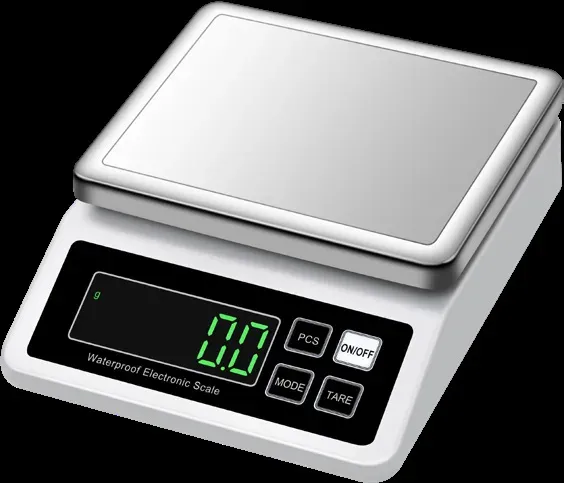
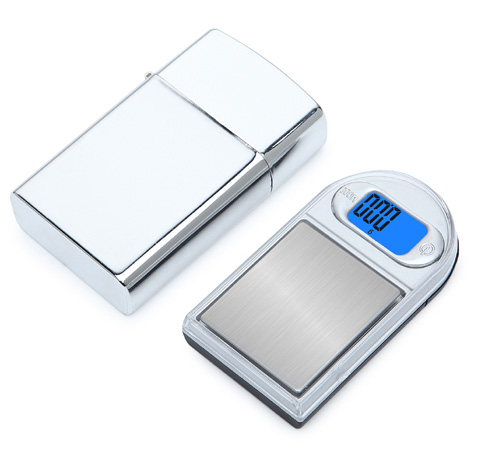
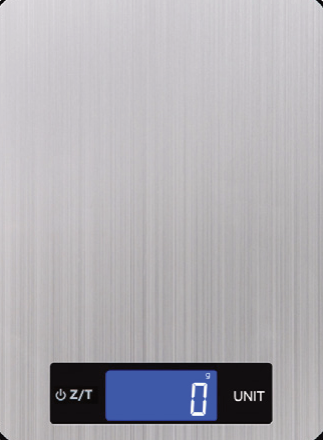
A master carton is the smallest packed unit that leaves the line intact, which makes it the smallest unit most suppliers will quote. The pack count then converts a sales forecast into an order quantity: the DH-A11 kitchen scale packs 20 pieces to a 39 x 34 x 27 cm carton, the CX-818 packs 20 pieces to a 40.3 x 34.5 x 27 cm carton at 14 kg gross, and the DH-333 pocket jewelry scale packs 200 pieces to a 43 x 26 x 31.5 cm carton.
Pack count changes what a small order means
Twenty pieces per carton and two hundred pieces per carton produce different minimum steps. With a 20-piece carton, a small order still divides into meaningful carton increments; with a 200-piece carton, each carton is a larger commitment and a partial carton is usually not available. Two suppliers quoting the same unit price can therefore demand very different first-order volumes. Convert every offer into whole cartons and compare the resulting commitment, not the unit count on the price list.
Platform choice is the biggest lever
A model already in production on an existing platform has its tooling, molds and test routine in place. A new housing or a changed internal layout adds setup work before the first saleable unit exists, and that setup has to be amortized somewhere. This is why two suppliers can quote the same capacity and resolution at very different thresholds. Ask whether the model you chose is a catalog platform, a platform variant with different colors or finishes, or a new development. The answer explains most of the gap.
Customization depth moves the floor again
Logo printing, custom housing color, a different display lens, a modified unit set, a private-label manual and a retail-ready box are separate changes, and each carries its own setup. A logo on an existing product is a printing step. A new enclosure is a tooling project. Between them sit levels most buyers underestimate, such as a new keypad layout or a packaging insert. Rank your changes by whether they touch the product, the firmware, the print or the carton, and ask the supplier which of those changes actually sets the minimum.
Artwork can be the binding constraint
Printed packaging often has a minimum that has nothing to do with the scale itself. Color boxes, manuals, labels and inserts are produced in print runs, and a short run can be more expensive per piece than the product it contains. A supplier may accept a small product order but require a larger packaging run, or accept your artwork only at a higher quantity. Ask for the minimum on each printed component separately. If the artwork minimum is higher than the product minimum, the packaging run is your real first order.
Compute the order in cartons, then check the pallet
Start with the number of units you can sell in a reasonable period, divide by the pack count, and round up to whole cartons. Then check how those cartons stack: a 20-piece carton and a 200-piece carton produce very different pallet footprints, container fill and warehouse handling. A mixed first order across two or three models can spread risk, but mixed cartons are often not possible, so each model adds its own carton rounding. Write the calculation down and compare offers on cartons, cubic meters and gross weight rather than unit price alone.
Three questions to ask before you request a quote
First, what is the master carton pack count for this exact model and configuration? Second, what is the smallest production run on this platform with my customization, and which change sets that floor? Third, which printed component has the highest minimum, and can I see the artwork dieline before I commit? These three answers turn a vague MOQ into a costed plan. Ask them before quoting, not after, because a quote built on the wrong configuration wastes both sides' time.
What a workable first order looks like
A workable first order is small enough to test sell-through and large enough to fill whole cartons without piling up stock. It uses a platform the supplier already runs, limits customization to changes that do not require new tooling, and accepts the print minimum on one packaging format rather than three. It also sets a reorder trigger in advance: a sell-through level, a review date and a lead-time buffer confirmed with the supplier. The goal is not the lowest possible quantity. It is the lowest quantity that produces reliable units and a clean second order.