Buying Guides
HS Codes for Digital Scales: What Your Broker Confirms
Most digital scales start near heading 8423, but the subheading, duty rate and documents depend on the instrument and the market. What your customs broker needs from you.
8423 is a family, not a code
Weighing instruments are generally classified in Chapter 84, in the 8423 family. That heading covers weighing machinery and includes separate subheadings for personal and household scales, conveyor scales, constant-weight scales and other weighing equipment. A kitchen scale, a jewelry scale and a checkweigher can all sit near each other at the four-digit level and still land in different national tariff lines. The heading is the start of the conversation, not the end of it.
The instrument type drives the subheading
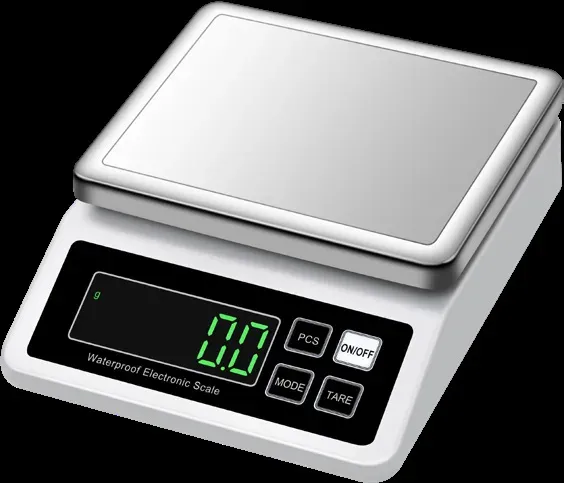
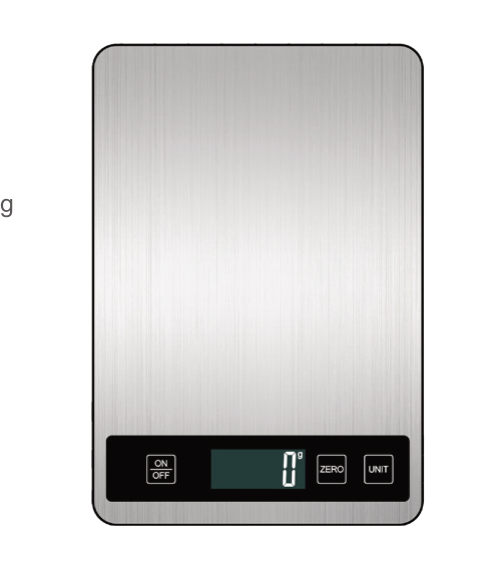
Within 8423, the subheading follows what the instrument is and how it is used. Personal and household scales are separated from industrial machinery, and continuous or constant-weight scales have their own lines. The heading text also excludes balances of a sensitivity of 5 cg or better, so a 0.001 g balance or a 0.01 g pocket scale such as the DH-333 can be argued toward heading 9016, while a 20 kg kitchen scale such as the DH-A11 sits on the other side of that line. Your broker applies the national tariff text, not a model number.
The same scale can change line by market
National tariff schedules extend the international six-digit code with their own digits, and they do not always split the same way. Two markets can apply different duty rates to the same instrument, and a free trade agreement can change the rate again if the origin rules are met. A code that a supplier used last year in one market is evidence, not proof. Only the importer's customs broker can confirm the final code and duty rate, against the current tariff of the destination country, before the invoice is issued.
What the broker needs from you
Give the broker a complete spec sheet: model, capacity and resolution, weighing units, platform size, power source, housing material, functions, accessories and intended use. Add clear photos, the manual and the carton dimensions. The broker is trying to answer three questions: what the instrument is, what it does, and how it is presented for sale. A one-line invoice description such as 'electronic scale' gives them nothing to work with. The same physical product can be described as household, personal, laboratory or industrial, and that wording changes the classification.
Describe the function honestly
Classification follows the objective characteristics of the product, so the description should match what the instrument actually does. Calling a 5 kg kitchen scale a laboratory balance to sound more technical can push it toward a line with different requirements and a different rate. Calling a precision balance a kitchen scale can understate its capability. Use the capacity, resolution and intended application from the spec sheet, and let the broker decide which tariff language fits. Marketing language belongs in the brochure, not the customs description.
The code must survive three documents
The classification has to survive three documents at once: the commercial invoice, the packing list and the certificate of origin. A code stated on the invoice can be contradicted by a packing list that describes the goods as another product, especially when one document lists model numbers and the other uses a generic category name. The certificate of origin carries a third version of the description, and a code that fits the invoice can sit oddly beside it. When the three disagree, the broker is defending a code the file does not support. Send the drafts together and ask the broker to confirm the code appears consistently on all three.
Duty is one line in the landed cost
The duty rate is only one component of the landed cost. Import VAT or GST, brokerage, terminal handling, transport to the warehouse and any inspection fees sit alongside it. A rate found on a search engine may be outdated, may apply to a different subheading, or may assume an origin that does not apply to your goods. Ask the broker for a landed-cost estimate using the actual invoice value, the confirmed origin and the destination port. Budget from that number, not from a rate copied from a blog.
A sequence that avoids surprises
Send the spec sheet to the broker before production, not after the goods are packed. Ask for a proposed classification in writing, with the tariff text and the duty rate. Use that answer to check the invoice description and the certificate of origin. At shipment, compare the final documents against the broker's note. At destination, keep the entry and the supporting documents on file. If the code changes after a ruling or a tariff update, the broker should tell you before the next order, not after the container arrives.
Questions to put to the broker
Ask which subheading applies and why, what duty rate and tax apply at the destination, whether any origin preference is available, which documents the entry requires, and what description should appear on the invoice. Ask also whether the answer changes for a different capacity or resolution in the same family. A broker who explains the reasoning is more useful than one who returns a number. The importer remains responsible for the declaration, so the reasoning should be in your file.