Buying Guides
Baking Scale Guide: Baker's Percentage Without Cups
Why baker's percentage needs weight, how 0.1 g and 1 g resolutions divide home and production work, and which capacity and pan size to specify for a bread bakery.
A cup is a volume guess; baker's percentage is a weight system
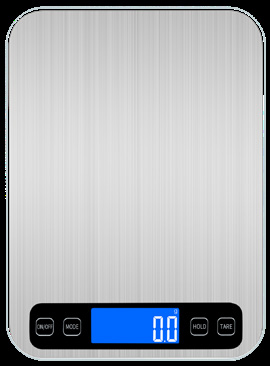
Baker's percentage expresses every ingredient as a percentage of the flour weight. If the flour is 1,000 g, a 65% hydration dough takes 650 g of water, with 2% salt at 20 g and 1% yeast at 10 g. Cups cannot carry that system because a cup of flour varies with the mill, the humidity and how the baker fills it. A bread baking scale removes the conversion step: the flour weight is treated as 100 percent, every other ingredient is calculated as a percentage of it, and then each is weighed. That is why bakeries that publish formulas in percentages weigh everything, including the water.
Where 0.1 g matters, and where 1 g is enough
Resolution should follow the smallest ingredient, not the largest, which is why a 0.1 g kitchen scale exists. Salt at 2% of 1,000 g is 20 g, so a 1 g step is 5% of the salt; yeast at 1% is 10 g, so a 1 g step is 10%. A 0.1 g step gives a finer adjustment on those additions. The DH-C305, DH-K21 and DH-A30S all offer 3 kg/0.1 g and 5 kg/0.1 g; the DH-8901 offers 0.1 g from 1 kg to 5 kg and a 10 kg/1 g tier; the DH-8905 holds 0.1 g to 10 kg. Check the small-ingredient weight in your formula before choosing the increment.
Capacity: home loaf, bakery batch, production run
Capacity separates the home baker from the production bakery. A home loaf or a small batch of rolls usually fits inside 3 kg; a 0.1 g scale in that range is the practical choice. A bakery mixing 10 kg of dough needs a 10 kg capacity, but it also needs a fine tier for preferments and small test batches. The C305 and K21 reach 10 kg/1 g at the top; the 8901 starts at 1 kg/0.1 g and ends at 10 kg/1 g; the 8905 holds 0.1 g all the way to 10 kg, which suits a shop that scales small and large batches on one bench. Confirm the largest bowl plus dough weight you will put on the pan.
The bowl tare is the whole workflow
The bowl tare is not a feature to check at the end; it is the motion the baker repeats all day. Put the mixing bowl on the pan, reset the display to zero, add flour, reset again if the formula calls for it, then add water to the target weight. A deep bowl can hide the display, and a pan that is too small lets the bowl overhang and load the edge. Ask the supplier to confirm the tare range and whether the display can be read with a bowl in place. A scale that cannot be tared with the bowl is the wrong scale, no matter how good its resolution.
Unit systems: grams, pounds and milliliters
Unit systems matter when a formula crosses borders. The C305 lists g, oz, ml, ct, kg, tl, fl:oz, lb:oz and lb; the K21 covers g, gn, tl, ml, lb, ct, ozt and kg; the A30S, 8901 and 8905 each list g, tl, ct, fl:oz, lb:oz, lb, oz, milk ml, ml and kg. A US baker may work in lb:oz, a European bakery in grams, and an Asian market may ask for tl. Milliliter modes are useful for water and milk, but they assume a density; for exact hydration, weigh the water in grams and treat the ml mode as a convenience.
Pan size decides whether the bowl sits still
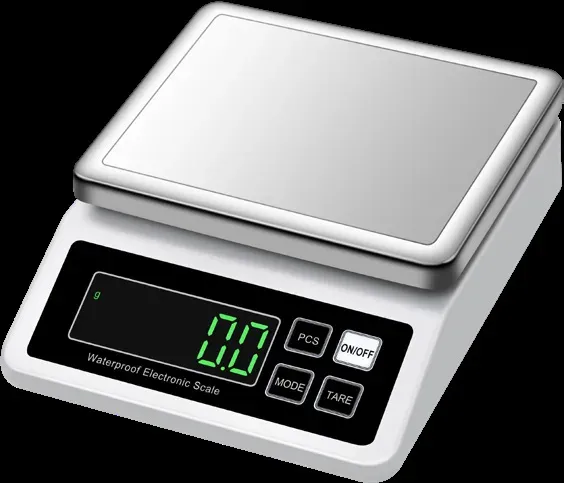
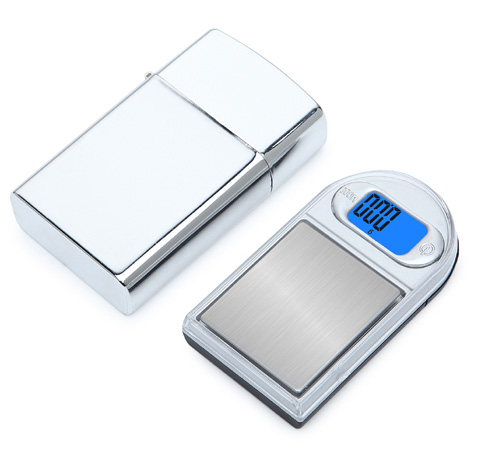
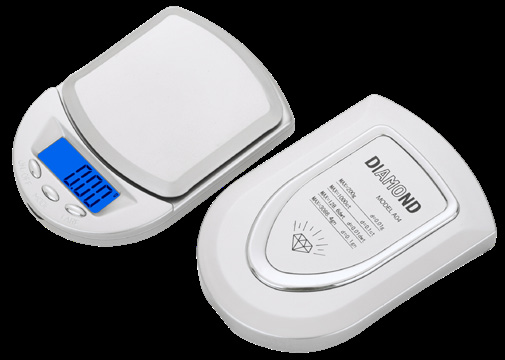
Pan size is the quiet spec that decides whether the bowl sits still. The DH-8905 has a 13 x 13 cm pan, the DH-K21 a 14 x 14 cm pan, the DH-8901 a 14 x 13.6 cm pan, the DH-C305 a 15 x 14.7 cm pan and the DH-A30S a 23 x 17 cm pan. A narrow pan is fine for a small bowl or a bread pan; a wide pan is better for a large mixing bowl that would otherwise overhang. Check the bowl base against the pan, and check the product height if the scale has to slide under a shelf or into a drawer.
Five models and the jobs they fit
A baker's percentage scale is chosen by batch size and bowl, not by the highest number in the catalog.
Test a bakery scale with a real formula
Test a bakery scale with a real formula rather than a calibration weight alone. Place the bowl, tare it, weigh 1,000 g of flour, add 650 g of water and check the total; then weigh 20 g of salt and 10 g of yeast and see whether the display settles at those small values. Repeat the flour weight three times and note any drift. Ask for the carton plan too: the C305, K21 and 8901 ship 30 pieces per carton, the A30S ships 20 and the 8905 ships 30. Request a sample from ZmoTek before you commit to a bakery line.