Buying Guides
Amazon FBA Scale Supplier Brief: Cartons and Labels
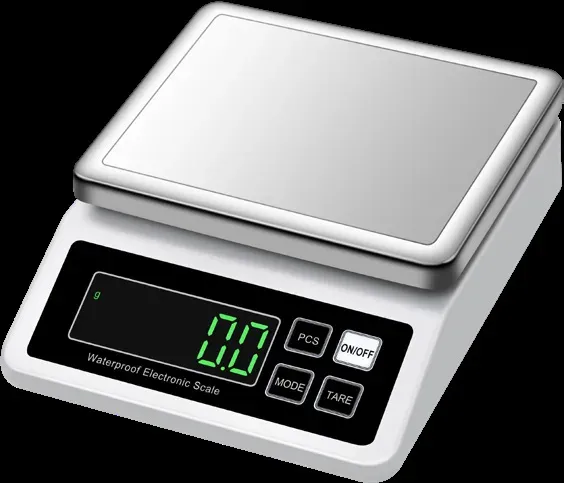
An FBA seller needs a different scale brief from a distributor: sample orders, retail-ready packs, barcode placement, carton data for fees and returns-friendly specs.
An FBA brief is not a distributor brief
A wholesale distributor buys in pallets and sells to shops. An Amazon FBA seller buys a test quantity, ships to a fulfillment center, and carries the return risk on every unit. The seller therefore needs three things the pallet buyer does not: a retail-ready box, a barcode that scans at intake, and carton dimensions that match the fulfillment center's fee tiers. The scale may be the same model, but the packaging and the data around it are not. Ask for all three before you compare unit prices.
Start with a sample, not a production run
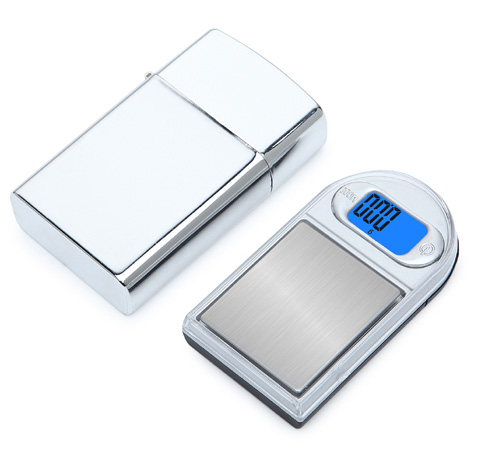
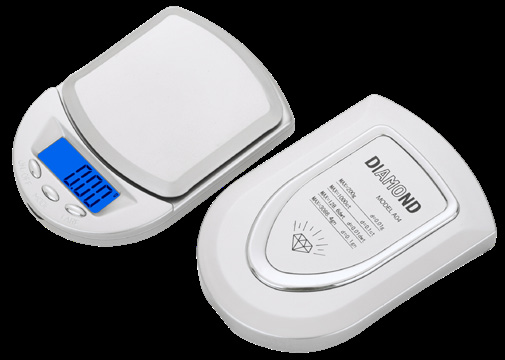
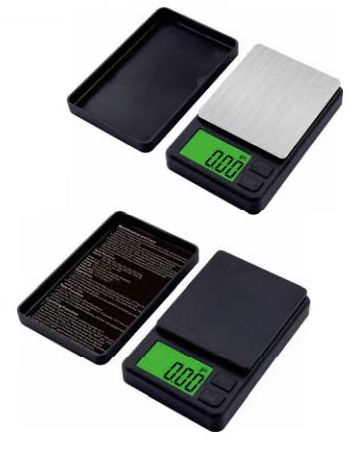
Begin with a sample order rather than a production run. A sample lets you check the display, the tare, the lid or tray, the battery type and the packaging in your own hands. It also gives you the unit weight and the color box dimensions you need for the listing. The T2 pocket jewelry scale is listed at 73.02 g with a plastic pan and 78.32 g with a stainless pan, in a 10 x 5.8 x 2 cm color box. A few grams and a few millimeters change the shipping data.
Retail-ready packaging and the label window
Retail-ready means the unit can go from carton to shelf or fulfillment center without repacking. Ask whether the scale ships in a printed color box, whether the box has a window or a photo panel, and whether the box is strong enough to survive parcel handling. The T2 listing includes color box dimensions, which is the data you need to compare a box against your marketplace's size rules. If the box is plain, ask for the box dimensions and the material grade before you plan the listing photos.
Barcode placement belongs in the spec
Barcode placement is a packaging decision, not a sticker applied at the last minute. Ask where the supplier can place a label, how much clear space the box has, and whether the barcode can sit on a flat panel rather than across a fold. For a private-label order, ask who generates the barcode and who approves the artwork. Also ask for a sample of the printed box before the production run, because a barcode that wraps around an edge may scan poorly at the fulfillment center. Put the label position in the purchase specification.
Carton dimensions and fee tiers
Fulfillment centers charge on dimensions and weight, so the master carton is a fee input. Ask for length, width, height, piece count and gross weight, measured from a packed carton rather than taken from a nominal spec. Two examples show the format: the DH-8702 packs 30 pieces in a 53.5 x 36 x 26 cm carton, and the DH-C305 packs 30 pieces in a 53 x 39 x 23.5 cm carton. The T2 carton is 200 pieces at 50 x 32 x 23 cm with a gross weight of 17.76 kg. A carton that bulges in transit can cross a dimension threshold, so recheck the figure on a packed sample.
Specs that reduce returns
Returns-friendly specs are the ones a buyer can check before opening the box. A clear lid or a tray that seats squarely, a published unit weight and box size that match the listing, packaging that protects the tray in transit, and tamper-evident sealing are the practical ones. The T2 pocket jewelry scale offers a plastic or stainless pan, and the DH-8902 lists a large tray at 14.3 x 10.6 x 2.3 cm and a small tray at 10.4 x 10.4 x 0.8 cm. Ask which configuration is standard, because the listing must match the box.
What to approve before a private-label run
A private label run is approved on the printed pack, not on a drawing. Ask for a sample of the finished color box with the barcode in its final position, and check that the model name on the housing matches the listing. Confirm who signs off the artwork and what counts as approval. A box proof that arrives after the production run is not an approval step. Keep one approved sample in hand so a later reorder can be compared against the pack that was signed off.
The question list for the supplier
Send the supplier a one-page brief with the model, the unit configuration, the packaging format, the barcode position, the carton data and the sample quantity. Ask for a sample, a printed box proof, the carton dimensions and gross weight, and the unit weight for each configuration. Then test the sample against your listing photos and your return policy. The goal is not the lowest unit cost; it is a product that arrives as described and scans at intake. Our production base can quote the scale and the packaging together so the data matches.
Compare quotes on the same basis. Ask each supplier to quote the same model, unit configuration and packaging format, and to state the carton dimensions and gross weight in the same units. If one quote includes a printed box and another does not, the unit prices are not comparable. Put the sample quantity and the label position in the brief as well, so the reply covers them without a second round of questions.