Buying Guides
How a Digital Scale Order Runs: Sample to After-Sales
Six stages, with the confirmed numbers: 7 to 15 days for a sample, about a week for stock dispatch, 3 to 15 days of peak-season addition, and a seven-day check on arrival.
The order in six stages
A scale order is easier to manage when you know which stage owns the date. There are six: sample, purchase order, production, inspection, shipping and the check after arrival. Each has its own clock and its own decision, and most disagreements about a late shipment come from two people assuming different stages were running at the same time.
Stage 1: the sample, and what it settles
A made sample takes 7 to 15 days. The first sample and its freight are paid by the buyer, and both are deducted from the order if a formal order follows with a value of at least USD 1,000. What the sample settles is the production reference: the exact logo, packaging, unit set and accessories that will be repeated at volume. Skipping the sample does not save time; it moves the disagreement to the container.
Stage 2: the purchase order and what must be in it
The purchase order should name the model and its full configuration, the quantity in whole cartons, the unit and total price, the shipping term, the packing requirements and the dates you are relying on. Where a specification matters, attach the approved sample photos rather than describing the unit in words. Two buyers can describe the same grey housing very differently, and the supplier will build to the description it received.
Stage 3: production, on the stock or the custom clock
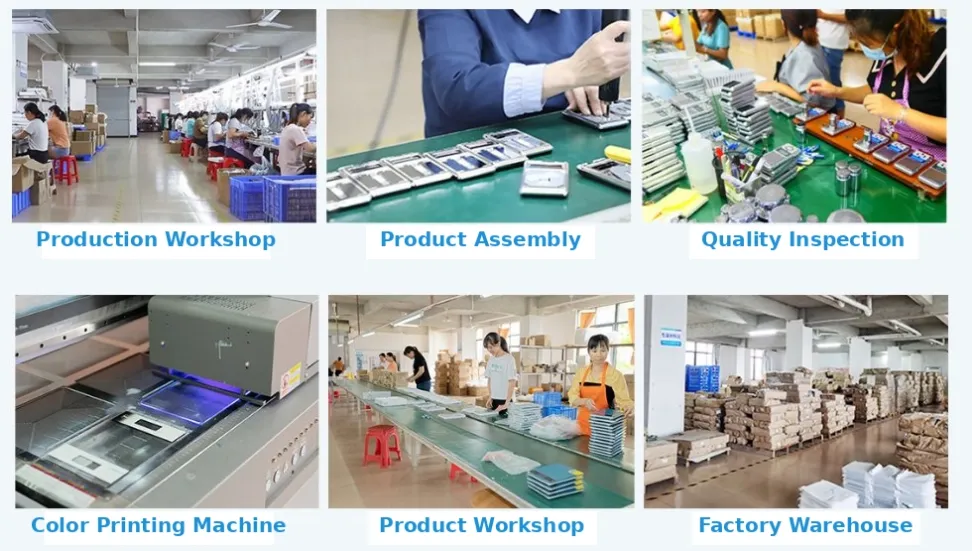
If the model is in stock, dispatch usually happens within a week of confirmation, and the work is picking, inspection and packing rather than assembly. If the order is customized, the production slot depends on the line, and peak season adds 3 to 15 days on top. A customized order and a stock order placed on the same day can therefore leave the factory two weeks apart, which is why the model choice is part of the schedule decision.
Stage 4: inspection, and who may inspect
Small orders are not open to third-party inspection. Large orders, for example 10,000 units and above, can be inspected by a third party before shipment. The reason is arithmetic rather than policy: an inspection visit costs roughly the same whether the container holds two hundred units or twenty thousand, so on a small order the fee can approach the value of the goods being checked. If independent inspection is a requirement in your process, say so at the quotation stage so the order can be structured around it.
Whatever the order size, write the inspection you expect into the purchase order: how many units will be checked, which functions, against what reference weight, and who signs the result. Where buyer inspection is not part of the order, the supplier's own pre-shipment check is what stands between the line and the container, so naming its scope in the order is what makes it checkable rather than assumed.
Stage 5: documents and shipping
Shipping runs on documents: commercial invoice, packing list and, where your market requires it, a certificate of origin. The carton count, gross weight and dimensions on those documents must match the physical shipment, because a mismatch is what holds a container at destination. Give your forwarder the figures as soon as they are confirmed and book before the goods are packed. Confirm the actual cut-off with the forwarder rather than assuming the date on the quotation still holds.
Stage 6: the seven-day check after arrival
Product quality must be confirmed within seven days of receiving the goods. That window is not a grace period for finding problems later; it is the period in which a claim can be verified against the shipment. Open cartons from more than one position in the container, check a spread of units rather than the top layer only, and compare them with the approved sample. Record what you checked and when, because a claim made in week three is hard to separate from handling and storage.
How a defect claim is handled
If units arrive faulty, send a video showing the problem on the actual unit, with the model and the fault visible. We then decide, for that specific case, whether to send replacement parts or to take the goods back and ship again. The decision depends on what failed and how many units are affected, so a video that shows the fault clearly is what makes a fast answer possible. A description alone usually leads to a round of questions before anything can be decided.
Keep one order file
Keep the approved sample photos, the confirmed purchase order, the packing list, the shipping documents and the arrival check in one file. That file is what turns a later question into a lookup instead of an argument, and it is also what makes the second order faster: most of the decisions in this list have already been made once.