Oct 6, 2026Material Notes
Jewelry Scale Units Explained: g, ct, tl and oz
What each weighing unit on a jewelry scale means, who uses it, and how to match a unit set to your buyers before you order.
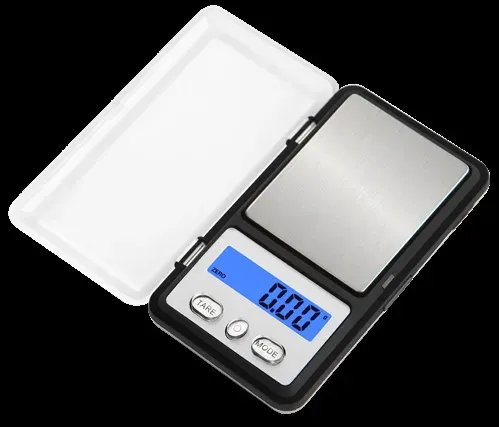
The units behind the trade
Jewelry and precious-metal buyers weigh in more than grams. Carats (ct) price gemstones; troy ounces (ozt) and pennyweight (dwt) appear on bullion and scrap quotes; grains (gn) survive in ammunition and historical trade; and the tael (tl) remains standard for gold trading in parts of Asia. A pocket scale sold into this market should switch between at least g, ct, tl and oz.
Match the unit set to your buyers
The DH-333 covers g, ct, tl and oz, which fits general jewelry counters. The DH-A05 adds ozt, dwt and gn for bullion desks, and reads 100 g to 500 g in 0.01 g steps. Precision balances go further still: the DH-456A lists g, ct, lb, oz, dr, gn, ozt, dwt and more, including three tael variants. Match the list to what your counter actually quotes in, not to the longest spec sheet.
Balance range against readability
Readability and range trade against each other. A 100 g or 200 g pocket scale at 0.01 g, like the DH-333, handles counter sales and gemstone valuations; coarser 0.1 g readability suits kitchen-style portioning; and 0.001 g work moves to bench balances. Confirm the readability your buyers complain about most, then pick the range band around it.
Request a model shortlist
Tell ZmoTek which units and readability your market expects, and we will shortlist pocket scales and balances from our cooperating factories, arrange samples and confirm packaging.